Laptop 3D Icon Compass: A Practical Guide to Choosing the Right Digital Assets
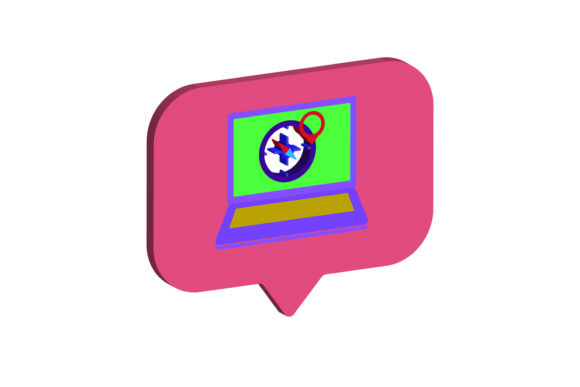
In the world of digital design, visual clarity and professional presentation are paramount. Whether you are creating a website for a small business, designing marketing materials for an educational platform, or crafting social media content as a freelancer, the icons you choose speak volumes about your attention to detail. One specific asset that has gained traction among creators is the Laptop 3D Icon Compass. This isn't just a simple graphic; it represents a blend of modern technology (the laptop) and navigation or direction (the compass), symbolizing guidance in the digital age.
However, purchasing or downloading a single image file often leads to frustration later in the design process. Many beginners assume that buying a "Laptop 3D Icon" means they receive a versatile, ready-to-use package. In reality, without understanding file formats, resolution standards, and editability, even the most stunning visual can become unusable. This guide aims to help you navigate these pitfalls, ensuring that when you invest in assets like the Laptop 3D Icon Compass, you get maximum value and flexibility.
Understanding What You Actually Receive
The phrase "What You Get" is critical when evaluating any digital product listing. A common mistake buyers make is assuming that a high-quality preview image equates to a high-quality source file. If you are looking at a product description for a set including a Laptop 3D Icon Compass, you need to scrutinize the deliverables carefully. A robust package should not only provide the final visual but also the tools necessary to adapt it to various design contexts.
A comprehensive digital file package typically includes six distinct formats, each serving a specific purpose in the design workflow. Understanding these distinctions prevents costly rework and ensures compatibility with different software environments. Here is what a premium, well-structured package should include:
- AI File (Adobe Illustrator): This is the industry-standard vector format for Adobe users. It allows for non-destructive editing, meaning you can change colors, resize elements, and modify paths without losing quality. If you plan to integrate the icon into larger brand identities, this file is essential.
- EPS File (Encapsulated PostScript): Similar to AI, EPS is a vector format widely supported by various design applications beyond Adobe’s ecosystem. It is crucial if you use alternative software like CorelDRAW or Affinity Designer and need scalable graphics.
- SVG File (Scalable Vector Graphics): For web designers and developers, SVG is king. It is XML-based, meaning it loads quickly on websites and scales perfectly on all screen sizes, from mobile phones to 4K monitors. Using an SVG version of your Laptop 3D Icon Compass ensures crisp rendering on any device.
- DXF File (Drawing Exchange Format): This format is vital for physical production. If you intend to use the design for laser cutting, vinyl cutting, or CNC routing, DXF provides the precise geometric data needed for machinery. Ignoring this format limits your ability to move from digital to physical products.
- JPG File (Joint Photographic Experts Group): This is a raster format suitable for quick previews, email attachments, or printing where vector editing is not required. However, JPGs do not support transparency, which can be a limitation depending on your background needs.
- PNG File (Portable Network Graphics): Like JPG, PNG is a raster format, but it supports transparency. This makes it ideal for overlaying the Laptop 3D Icon Compass onto other images or colored backgrounds without a white box surrounding it.
Common Pitfalls in Asset Selection
Even with a complete file list, errors occur during acquisition and usage. One frequent misunderstanding involves canvas size and resolution. The standard specification for many high-quality digital icons is a 1920px x 1280px canvas size. While this sounds large, it is important to understand that pixel dimensions matter differently for vectors versus rasters.
If you are using the JPG or PNG files for print, a 1920x1280 resolution might suffice for small items like business cards or social media posts, but it may appear pixelated if scaled up for banners or posters. Conversely, vector files (AI, EPS, SVG, DXF) have no such limitation. They remain sharp at any size. Buyers often overlook this distinction, expecting a raster file to perform like a vector. Always check whether your primary use case requires scalability. If you need to zoom in infinitely, rely on the vector files. If you need a quick static image for a blog post, the PNG will serve you well.
Another overlooked detail is the complexity of the 3D render. A "3D Icon" implies depth, lighting, and shadows. When editing these files, especially in AI or EPS, the layers can be complex. Beginners sometimes struggle to isolate specific parts of the icon, such as separating the compass needle from the laptop body. Without proper layer organization in the source files, editing becomes a tedious process of trial and error. To avoid this, ensure the product description mentions organized layers or grouped elements, particularly in the AI and EPS files.
Practical Advice for Better Results
To ensure satisfaction with your purchase of a Laptop 3D Icon Compass and similar assets, adopt a checklist approach before finalizing your decision. First, verify the software compatibility. Do you have access to Adobe Illustrator? If not, prioritize the EPS and SVG files. Second, consider your end goal. Are you building a responsive website? Then the SVG file is your priority. Are you preparing files for a laser cutter? The DXF file is non-negotiable.
Furthermore, always test the files in your preferred software before committing to a project. Open the AI file and check if the gradients and effects render correctly. Open the SVG in a browser to ensure there are no broken links or missing fonts. This small step can save hours of troubleshooting later. Additionally, remember that "easy to edit" does not mean "no effort." Even with well-structured files, you may need to adjust color palettes to match your brand guidelines. Take time to explore the color swatches and layer panels.
Evaluating Value and Usability
When comparing options, look beyond the price tag. A cheaper bundle might offer fewer formats or lower-resolution raster files, forcing you to buy additional assets or hire a designer to convert them. A complete package offering six formats—AI, EPS, SVG, DXF, JPG, and PNG—at a 1920x1280 base resolution offers significant versatility. It caters to both digital and physical workflows, making it a valuable asset for entrepreneurs and creators who wear multiple hats.
By understanding the nuances of file types, resolution, and editing capabilities, you position yourself to make smarter decisions. The Laptop 3D Icon Compass is more than just a decorative element; it is a functional tool that can enhance communication and visual appeal. Treat it with the respect due to professional-grade assets, and you will find that it pays dividends in the quality and efficiency of your projects.
Ultimately, the goal is to streamline your creative process. By choosing packages that offer comprehensive format support and clear documentation, you reduce friction and focus on what matters most: delivering exceptional work to your audience. Whether you are a seasoned professional or just starting out, having the right tools—and knowing how to use them—is the key to success in the competitive landscape of digital content creation.