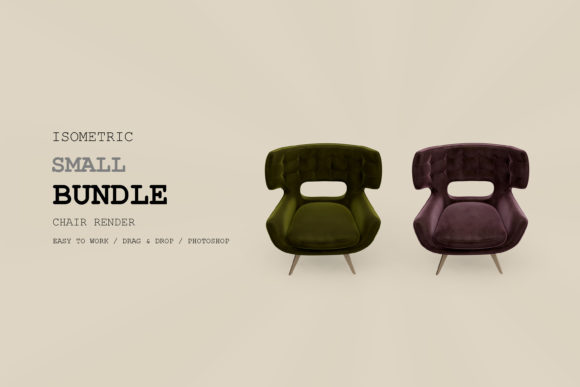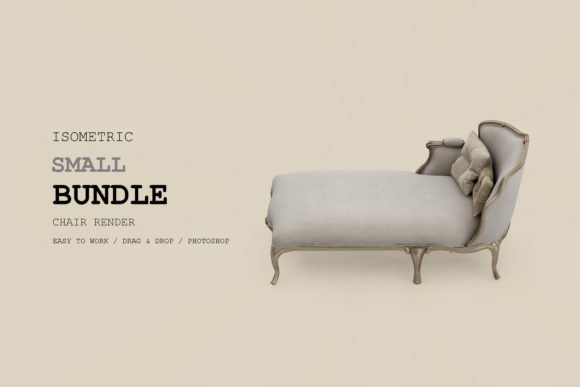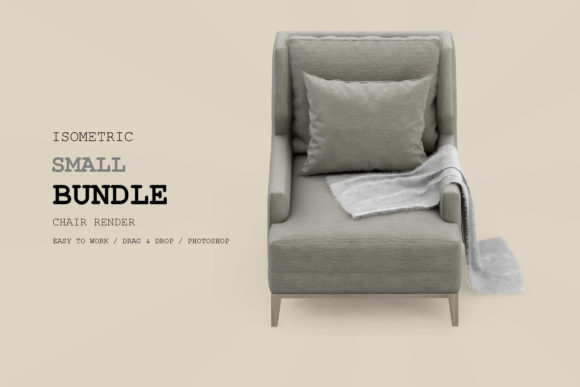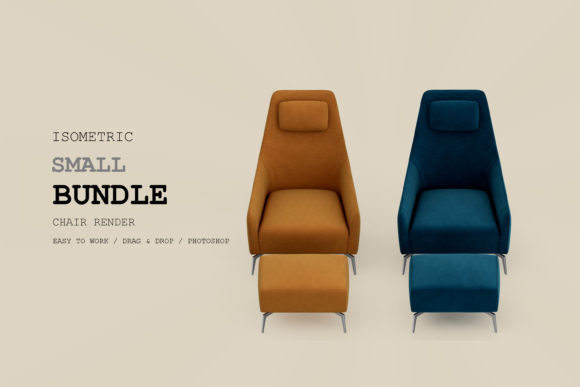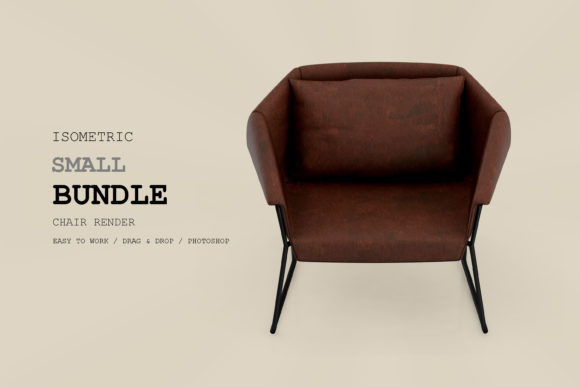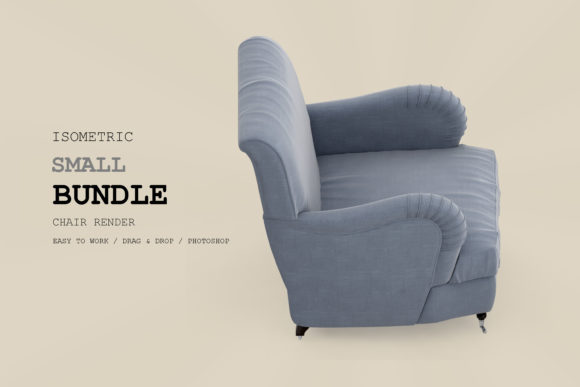
Elevating Visual Narratives with the Isometric Armchair 3D Rendering Pack 6
In the rapidly evolving landscape of digital design and visual communication, the demand for high-quality, versatile assets has never been higher. Designers, architects, educators, and marketers are constantly seeking tools that allow them to communicate complex spatial relationships clearly and aesthetically. Among these tools, isometric projection remains a cornerstone technique, offering a unique blend of technical precision and artistic charm. At the forefront of this niche is the Isometric Armchair 3D Rendering Pack 6, a specialized asset collection designed to meet the rigorous demands of modern creative workflows. This article explores the profound utility, technical specifications, and diverse applications of this premium rendering pack, demonstrating why it has become an essential resource for professionals across various industries.
The Power of Isometric Design in Modern Communication
Before delving into the specifics of the armchair pack, it is crucial to understand why isometric design continues to dominate digital interfaces and print media. Unlike perspective drawing, which relies on vanishing points to create depth, isometric projection uses parallel lines to maintain consistent scale throughout the image. This characteristic makes it exceptionally effective for technical illustrations, infographics, and user interface (UI) elements where accuracy and clarity are paramount.
The Isometric Armchair 3D Rendering Pack 6 leverages this geometric discipline to present a piece of furniture—a universal symbol of comfort and interior design—in a way that is both visually appealing and structurally informative. By stripping away the distortion of traditional perspective, designers can focus on form, texture, and spatial arrangement without the cognitive load of interpreting depth cues. This makes the armchair not just a decorative element, but a functional component of larger compositional narratives.
Technical Excellence: Features That Drive Professional Workflows
What sets the Isometric Armchair 3D Rendering Pack 6 apart from generic clipart or low-resolution stock images is its adherence to professional-grade technical standards. Each feature is engineered to streamline the design process, reduce post-production time, and ensure compatibility with industry-standard software such as Adobe Photoshop, Illustrator, Sketch, and Figma.
High Resolution and Print-Ready Quality
One of the most critical aspects of any design asset is its resolution. The pack boasts high resolution capabilities with a standard DPI of 300. This specification is non-negotiable for print projects, ensuring that when the armchair is scaled up for brochures, posters, or architectural presentations, the edges remain crisp and the textures retain their integrity. For web-based applications, the high pixel density ensures the asset looks sharp on retina displays and high-DPI screens, providing a polished look that enhances brand perception.
Separated Background and Shadow Elements
Integration is often the most time-consuming part of using third-party assets. The separated background feature allows designers to place the armchair onto any backdrop—be it a minimalist white canvas, a textured paper surface, or a complex architectural floor plan—without the hassle of manual masking. Furthermore, the inclusion of a separated shadow adds a layer of realism and grounding. Shadows provide context, indicating the relationship between the object and the surface it rests upon. In isometric design, shadows must follow specific geometric rules; the pack ensures these shadows are mathematically accurate, maintaining the illusion of three-dimensionality while adhering to the isometric grid.
Organized Layers for Maximum Flexibility
For advanced users, the true value of the pack lies in its organized layers. Rather than presenting a flattened image, the renderings are broken down into logical components. This granular control allows designers to modify colors, adjust opacity, or isolate specific parts of the armchair for detailed editing. Whether you need to change the fabric color to match a client’s branding or remove the legs to create a floating effect, the layered structure facilitates these edits with ease. This level of customization transforms a static asset into a dynamic tool adaptable to countless scenarios.
Comprehensive Support and Usability
A common pitfall in purchasing digital assets is the lack of guidance on how to utilize them effectively. The Isometric Armchair 3D Rendering Pack 6 addresses this by including a comprehensive help file. This documentation serves as a quick-start guide, explaining the file formats, layer structures, and recommended workflows for different design environments. It demystifies the asset, allowing even novice users to achieve professional results quickly. This support system reduces the learning curve and ensures that the investment in the pack yields immediate returns in productivity.
Diverse Applications Across Industries
The versatility of the Isometric Armchair 3D Rendering Pack 6 is evident in its wide range of potential applications. Its utility extends far beyond simple decoration, serving as a foundational element in various professional and educational contexts.
- Architecture and Interior Design: Architects frequently use isometric views to present space planning concepts to clients who may struggle with technical blueprints. The armchair provides a human scale reference, helping stakeholders visualize how furniture fits within a room layout. The separated background and shadow features allow for seamless integration into 3D floor plans or mockups.
- Education and School Projects: In academic settings, students in graphic design, architecture, or marketing courses often need high-quality visuals for presentations and portfolios. The pack offers a ready-made, professional-looking asset that elevates the quality of student work. The organized layers also serve as an educational tool, allowing students to study how complex objects are constructed digitally.
- Social Media and Digital Marketing: Content creators on platforms like Instagram, Pinterest, and LinkedIn rely on eye-catching visuals to engage audiences. Isometric illustrations have a distinct aesthetic that stands out in crowded feeds. The Isometric Armchair 3D Rendering Pack 6 enables marketers to create engaging posts about home decor, lifestyle products, or interior trends without the cost of hiring a 3D modeler.
- Website Design and UI/UX: Web designers often incorporate isometric icons and illustrations to break up text-heavy pages and add visual interest. The high resolution ensures the armchair looks pristine on all devices, while the separated background allows it to be used as a standalone icon or as part of a larger scene.
- Print Advertising and Editorial: Magazines, catalogs, and advertising campaigns require print-ready assets. With a DPI of 300, the pack meets the strict requirements of commercial printing. Advertisers can use the armchair to illustrate articles about relaxation, hospitality, or interior design trends, ensuring the final output is sharp and vibrant.
- Blogging and Content Creation: Bloggers and writers use visuals to enhance readability and retention. An isometric armchair can serve as a featured image or an inline illustration, adding a touch of professionalism and style to written content. The ability to customize colors via organized layers allows bloggers to align the image with their site’s color scheme.
Considerations for Implementation
While the Isometric Armchair 3D Rendering Pack 6 offers numerous advantages, successful implementation requires a thoughtful approach. Designers should consider the overall composition and how the armchair interacts with other elements in the scene. Since the shadow is separated, it is important to ensure that the lighting direction in the rest of the design matches the shadow’s angle to maintain visual consistency.
Additionally, while the pack is highly versatile, it is designed specifically for isometric contexts. Attempting to force the asset into a perspective-heavy design may result in visual dissonance. Therefore, it is best suited for projects that embrace the clean, geometric aesthetic of isometric projection. Users should also take advantage of the help file to understand the specific file formats included, ensuring compatibility with their preferred software version.
Conclusion
The Isometric Armchair 3D Rendering Pack 6 represents more than just a collection of images; it is a comprehensive solution for visual storytelling. By combining high-resolution quality, separated backgrounds and shadows, organized layers, and robust support documentation, it empowers designers to create compelling, professional-grade visuals with efficiency. Whether used in architectural presentations, educational materials, social media campaigns, or print advertisements, this pack provides the flexibility and quality needed to elevate any project. As the demand for clear, engaging visual communication continues to grow, assets like the Isometric Armchair 3D Rendering Pack 6 will remain indispensable tools for creators seeking to make an impact in a visually driven world.