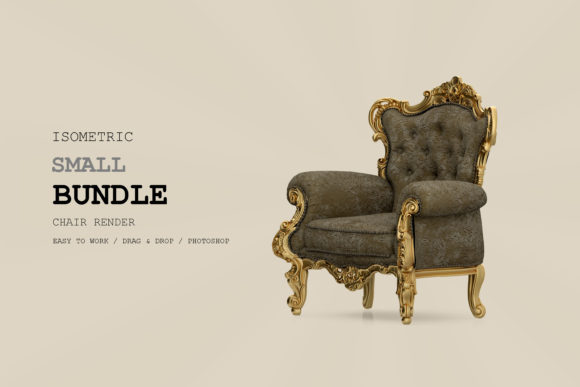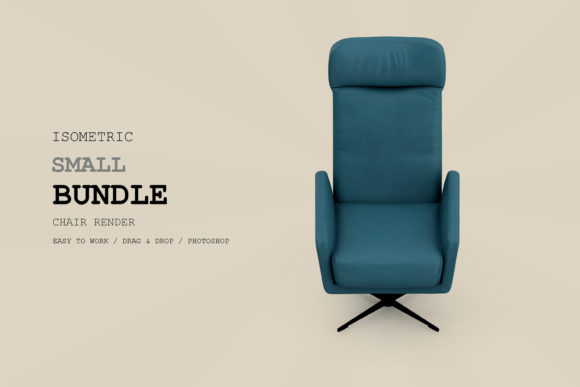
Evaluating Isometric Armchair 3D Rendering Pac 119 for Professional and Creative Projects
In the modern digital landscape, visual communication is paramount. Whether you are an architect presenting a concept to a client, a marketer designing a social media campaign, or a student submitting a final project, the quality of your imagery can make or break your message. Among the various tools available for creating high-impact visuals, Isometric Armchair 3D Rendering Pac 119 has emerged as a specialized resource designed to streamline the creation of isometric furniture illustrations. This asset pack offers more than just a static image; it provides a structured, editable framework that allows users to customize and deploy professional-grade graphics across multiple platforms.
Understanding what makes this specific rendering package distinct requires looking beyond the surface aesthetics. It is built on technical specifications that prioritize usability, print readiness, and organizational clarity. For professionals who deal with tight deadlines and strict formatting requirements, these underlying features are often just as important as the visual appeal itself. By examining its capabilities, limitations, and ideal use cases, we can determine where Isometric Armchair 3D Rendering Pac 119 fits into your broader design workflow.
Technical Specifications and Structural Advantages
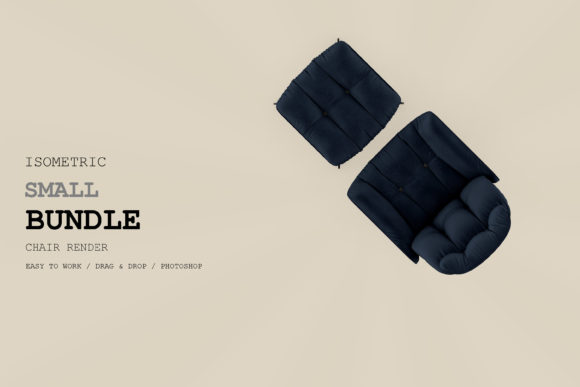
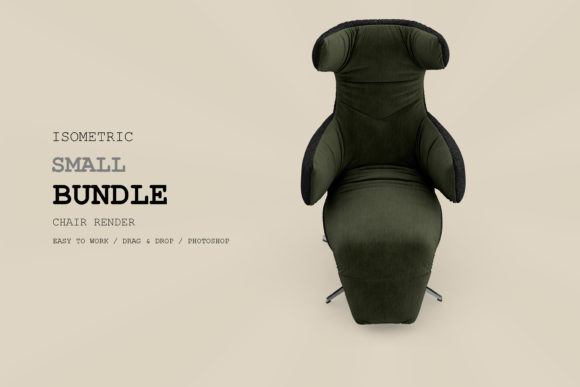
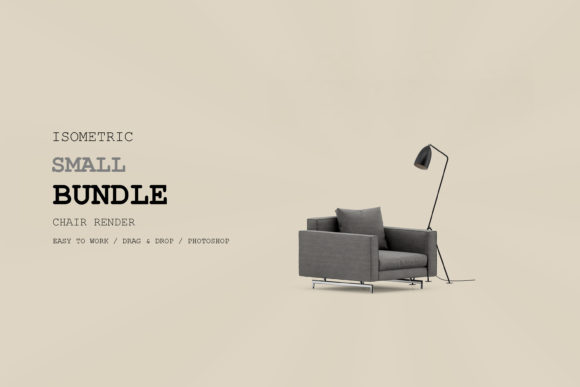
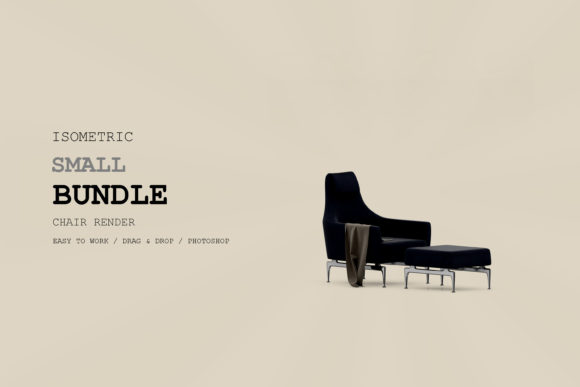
The core value proposition of Isometric Armchair 3D Rendering Pac 119 lies in its technical construction. Unlike many pre-rendered images found online that are flattened and difficult to modify, this package is designed with flexibility in mind. The inclusion of organized layers is a critical feature for any designer using software such as Adobe Photoshop, Illustrator, or similar vector-based programs. These layers allow for granular control over different elements of the armchair—such as the upholstery, frame, cushions, and legs—enabling users to change colors, textures, or even structural components without starting from scratch.
Furthermore, the specification of DPI 300 ensures that the asset meets industry standards for high-quality printing. In the world of graphic design, resolution is a binary factor: an image is either suitable for professional output or it is not. A 300 DPI file guarantees that when the armchair is scaled for brochures, posters, or business cards, it remains crisp and free of pixelation. This is particularly relevant for users transitioning between digital and physical mediums, as it eliminates the need for costly re-renders or low-quality upscaling.
Another significant technical benefit is the separated background. Many stock assets come with complex backgrounds that require tedious masking processes to remove. With a separated background, the armchair exists on its own transparency plane, allowing designers to place it instantly onto any color, pattern, or photographic backdrop. This saves hours of manual editing time and ensures consistency across a brand’s visual identity. Similarly, the separated shadow feature adds depth and realism without compromising the flat aesthetic typical of isometric art. Users can adjust the opacity, angle, or blur of the shadow independently, ensuring the object looks grounded and natural regardless of the context it is placed in.
Comparing Isometric Assets: Why Structure Matters
When evaluating Isometric Armchair 3D Rendering Pac 119, it is helpful to compare it against other common approaches to obtaining isometric furniture visuals. One alternative is commissioning a custom 3D modeler to create a unique piece. While this offers total originality, it is often prohibitively expensive and time-consuming for small projects or rapid prototyping. Another option is using generic clip art or unstructured PSD files. These may be cheaper but often lack the layer organization and high-resolution integrity required for professional work, leading to frustration during the editing phase.
Isometric Armchair 3D Rendering Pac 119 sits in a middle ground that prioritizes efficiency without sacrificing quality. It is not a fully customizable 3D scene file (like a .max or .blend file) that requires heavy rendering power, nor is it a simple JPEG that cannot be altered. Instead, it is a hybrid asset optimized for 2D design workflows. This makes it an excellent choice for designers who need the look of 3D rendering but operate primarily in 2D environments. Compared to full 3D scenes, it offers faster turnaround times. Compared to basic clip art, it offers superior editability and print readiness.
It is also worth noting the distinction between true isometric projection and pseudo-isometric designs. True isometric projections maintain precise mathematical angles (typically 30 degrees), which creates a consistent sense of scale and space. Isometric Armchair 3D Rendering Pac 119 adheres to these principles, making it suitable for architectural diagrams and infographics where spatial accuracy matters. If a project requires a more stylized, non-mathematical perspective, this asset might feel too rigid, but for technical or clean aesthetic applications, its adherence to isometric rules is a strength.
Ideal Use Cases and Application Scenarios
The versatility of Isometric Armchair 3D Rendering Pac 119 allows it to be deployed across a wide spectrum of industries. Its utility is best understood through specific scenarios where its features directly solve common problems.
- Architecture and Interior Design: Architects often need to present furniture layouts within floor plans or room elevations. The separated background and organized layers allow designers to easily swap out chair styles to match different interior themes. The high resolution ensures that these details remain clear even when printed on large-scale presentation boards.
- Social Media and Digital Marketing: In the fast-paced world of social networking, content needs to be visually striking yet quick to produce. Marketers can use the pre-made shadows and clean lines of the armchair to create eye-catching posts for e-commerce stores or lifestyle brands. The ability to quickly change the fabric color via layers means a single asset can represent multiple product variations, reducing the need for photoshoots.
- Print Projects and Advertising: For magazines, catalogs, and direct mail campaigns, the 300 DPI requirement is non-negotiable. Using an asset that is already print-ready reduces the risk of errors in the pre-press stage. Advertisers can leverage the isometric style to create engaging, infographic-style ads that explain product features clearly.
- Education and School Projects: Students in design, architecture, or marketing courses often struggle with the technical barriers of 3D modeling software. This pack serves as an accessible entry point, allowing students to focus on composition and color theory rather than wrestling with complex rendering engines. The included help file further supports learners by guiding them through the setup process.
- Web Design and Blogs: Web developers and bloggers frequently need icons or illustrative elements to break up text and enhance readability. The scalable nature of isometric art, combined with the organized layers, allows for easy extraction of individual components for use as web icons or decorative elements in blog headers.
Tradeoffs and Considerations
While Isometric Armchair 3D Rendering Pac 119 offers numerous advantages, it is important to acknowledge its limitations to ensure it is the right fit for your needs. First, because it is a pre-rendered 2D asset rather than a live 3D model, it lacks true interactivity. You cannot rotate the chair to view it from a different angle or simulate lighting changes dynamically. If your project requires dynamic 3D visualization, such as a virtual reality tour or an interactive 360-degree product viewer, this asset will not suffice.
Additionally, while the layers are organized, they are still based on a fixed geometry. If you need to alter the fundamental shape of the armchair—for example, changing the curvature of the backrest or adding arms to a wingback style—you will need advanced skills in vector manipulation or raster painting. It is not a tool for radical structural modification, but rather for cosmetic customization like color, texture, and minor adjustments.
Finally, reliance on a single asset pack means your visual style may become repetitive if used excessively across different projects. To maintain a unique brand identity, it is advisable to combine this asset with other elements or use it sparingly as part of a larger, diverse visual library.
Conclusion: Making an Informed Choice
Selecting the right visual assets is a strategic decision that impacts both the quality of your output and the efficiency of your workflow. Isometric Armchair 3D Rendering Pac 119 stands out as a robust solution for professionals and students who need high-quality, editable, and print-ready isometric illustrations. Its strengths lie in its technical precision, organized structure, and versatility across digital and print media.
If your primary goals involve creating clean, professional graphics for presentations, advertisements, or educational materials, and you value speed and ease of editing over dynamic 3D interaction, this package is likely an excellent investment. However, if you require fully customizable 3D models or highly stylized, non-standard perspectives, you may need to explore other resources. By carefully weighing these factors against your specific project requirements, you can ensure that Isometric Armchair 3D Rendering Pac 119 serves as a valuable tool in your creative arsenal.